Felix Braun · 23 October 2026
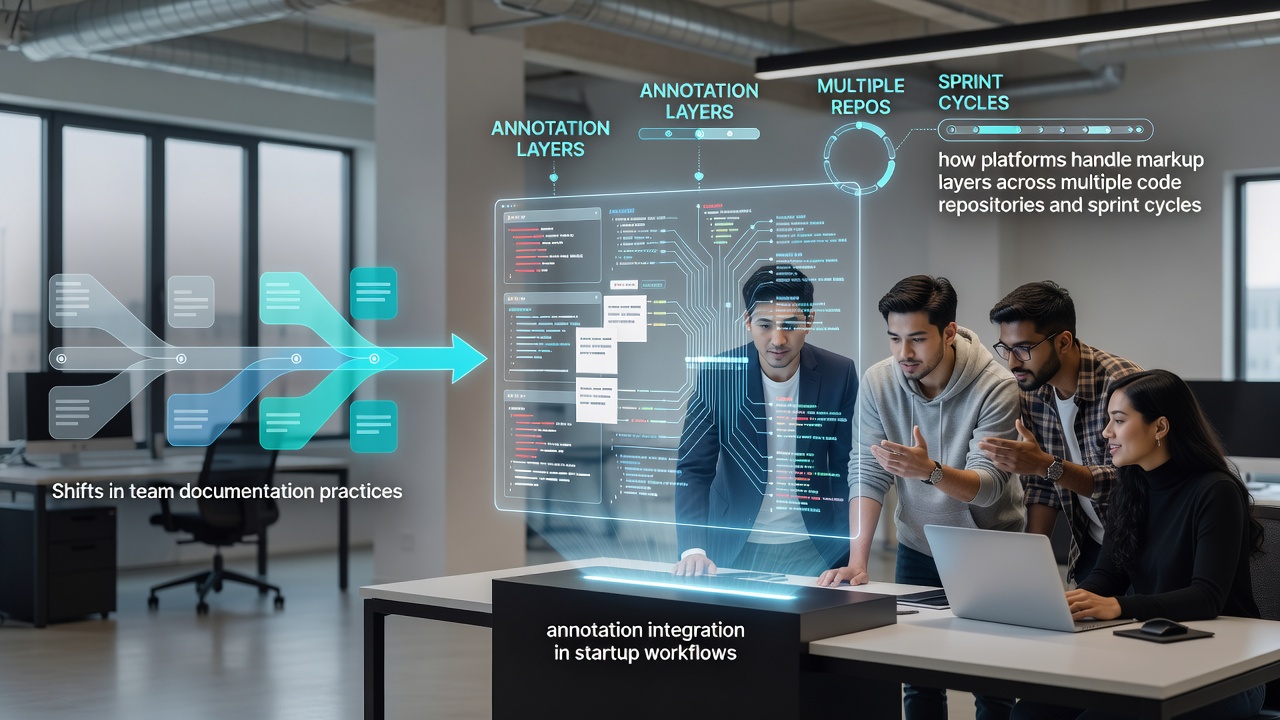
Shifts in Team Documentation Practices Driven by Annotation Integration in Startup Workflows Reveal How Platforms Handle Markup Layers Across Multiple Code Repositories and Sprint Cycles
Startup teams have adopted annotation tools that layer markup directly onto code and documentation files, which changes how groups organize notes and feedback across shared workspaces, and these integrations allow multiple contributors to mark sections without altering the base files themselves. Research indicates that such systems reduce the need for separate comment threads in chat applications while keeping context tied to specific lines or paragraphs in repositories.
Integration Patterns in Multi-Repository Environments
Platforms manage markup layers by mapping annotations to unique identifiers in each repository, which enables synchronization when code moves between branches or when teams pull updates from external sources, and data from industry reports show that this approach supports simultaneous work on frontend, backend, and infrastructure codebases without overwriting contributions. Observers note that tools often store layer information in separate metadata files that reference commit hashes, allowing retrieval of annotations even after major refactors occur.
Teams working across three or more repositories report that centralized annotation dashboards pull views from all connected sources, which displays markup from different projects in a single interface, and studies from research institutions highlight how this setup cuts down on context switching during daily standups. In October 2026, figures from technology adoption surveys revealed that over half of early-stage companies had implemented at least one such cross-repository annotation feature in their primary development environments.
Adaptations During Sprint Cycles
Annotation layers align with sprint timelines by allowing reviewers to attach feedback at the start of planning phases and track resolution through to demo stages, while platforms automatically archive resolved markup at the end of each cycle to keep active views uncluttered. Those who have studied these workflows find that automated tagging based on sprint identifiers helps surface relevant annotations when teams revisit older cycles for retrospectives.

Engineers often attach annotations to user stories in project management tools, and these links carry through to the corresponding code sections so that developers see both requirements and code comments in one place, according to documentation from standards organizations in the European Union. The process supports quick updates when scope changes mid-sprint because layers remain independent of the underlying file versions.
Technical Handling of Markup Layers
Markup handling relies on diff algorithms that compare annotation positions against current file states, which prevents drift when multiple developers edit the same sections, and solutions from academic studies demonstrate that conflict resolution protocols flag overlapping annotations for human review rather than automatic merging. Platforms also provide export options that bundle layers with repository snapshots, which aids compliance audits that require evidence of review processes.
Access controls limit who can view or edit specific layers based on repository permissions, and this granular approach maintains security across distributed teams without restricting collaboration, as noted in reports issued by Canadian government technology agencies. Versioning of the layers themselves allows rollback to earlier annotation sets if needed during troubleshooting sessions.
Conclusion
Annotation integration continues to reshape documentation routines in startup environments by embedding feedback directly into code workflows, and the methods platforms use to manage layers across repositories and sprints provide structured ways to maintain clarity amid rapid development. Continued observation of these systems shows steady refinements in synchronization and access features that support growing team sizes and project complexity.